
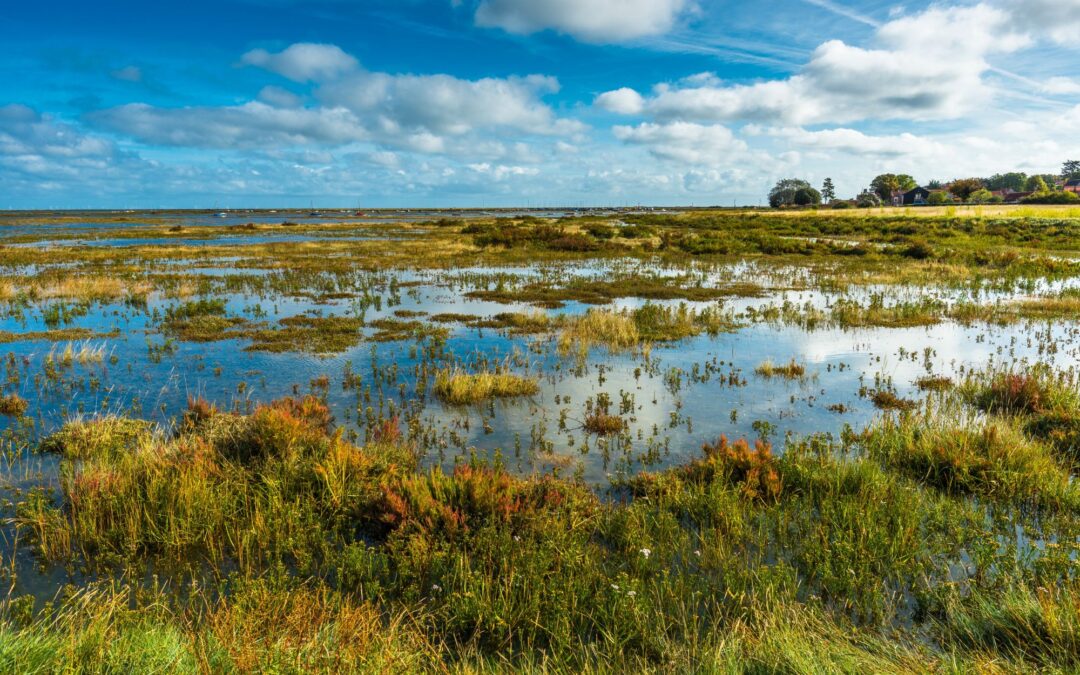
Wetlands can go unnoticed in environmental discussions, but they are absolutely crucial for maintaining our planet’s health. These distinctive ecosystems offer numerous ecological, financial, and societal advantages that are crucial to human society. This article looks into the environmental significance of wetlands.
The Crucial Role Wetlands Play in Climate Regulation
Wetlands serve as deep carbon sinks, which help alleviate climate change effects. The Intergovernmental Panel on Climate Change published a 2013 study showing that wetlands store about 30% of global soil carbon while only occupying 6% of the Earth’s surface. A separate study by Bridgham et al. (2006) in Global Biogeochemical Cycles explained that wetland soils store nearly twice the amount of carbon per unit as forests.
Flood Management and Water Purification
Wetlands provide a natural barrier to flooding by absorbing and retaining huge volumes of water. A 2017 study by Narayan et al., in Scientific Reports revealed that coastal wetlands prevented approximately $625 million in property damage during Hurricane Sandy on the U.S. East Coast. Wetlands minimize flood risks and the associated issues by holding massive amounts of water.
Moreover, wetlands function as natural water filtration systems. They eliminate pollutants like sediments, nutrients, and heavy metals through physical, chemical, and biological processes. A Vymazal (2010) study in Ecological Engineering demonstrated that wetlands remove more than 92% of nitrogen and 76% of phosphorus from water, greatly improving water quality and supporting healthier ecosystems downstream.
Wetlands Are True Biodiversity Hotspots
Wetlands provide habitats for a wide array of plant and animal life. A 2017 Ramsar Convention on Wetlands report revealed that roughly 40% of all species live or breed in wetlands. These ecosystems are particularly crucial for migratory birds that depend on them for sojourns during their long voyages.
Davidson’s 2014 study in Marine and Freshwater Research showed that wetlands support a greater species diversity than other ecosystems. The study also emphasized the importance of wetlands in preserving global biodiversity.
The Important Economic and Social Advantages of Wetlands Often Go Unnoticed
Wetlands yield numerous economic benefits, including resources like timber, fish, and medicinal plants. A 2017 World Wildlife Fund report stated that over a billion people worldwide rely on wetlands for their livelihoods.
Also, wetlands provide extremely important natural services for society, such as a freshwater supply, food production, and climate regulation, all of which significantly contribute to humanity’s survival. A 2016 study by Costanza et al. in Global Environmental Change estimated the total value of global wetland ecosystem services at around $47 trillion per year (for context, this is double the U.S. GDP). It goes without saying that people lack the cash, resources, and technology to replicate the services provided by wetlands.
The Struggle to Conserve Wetlands
Despite their priceless nature, wetlands face many threats, including climate change, pollution, and habitat destruction. A 2018 Ramsar Convention on Wetlands report estimated that a staggering 35% of Earth’s wetlands have disappeared since 1970, with the rate of loss only increasing in recent decades.
Conserving and restoring wetlands is vital for maintaining their environmental benefits and mitigating climate change effects. The Ramsar Convention offers a detailed plan for conserving and sustainably using wetlands. Many national and regional initiatives, such as the U.S. Clean Water Act and the European Union’s Natura 2000 network, aim to protect wetlands and their essential ecosystems.
Restoration efforts are also key in replenishing wetlands and their environmental functions. Remarkably, a study by Moreno-Mateos et al. (2012) published in PLOS Biology found that restored wetlands can recover upwards of 75% of their biodiversity and 77% of their ecosystem services within 50 years. This shows that restoration initiatives are indeed possible.
Boosting Public Awareness and Involvement
Increasing public awareness about the importance of wetlands is very important for their conservation and survival. Educational and outreach programs can help foster a deeper appreciation for the environmental, economic, and social benefits these ecosystems provide — perhaps even inspiring more people to support their preservation and conservation.
Local communities can play a significant role in protecting and managing wetlands, as they often have valuable knowledge about the local ecosystems and their resources. Engaging communities in wetland management and restoration can help ensure long-term success and promote sustainable development.
Wetlands are indeed the underappreciated protectors of our environment, providing numerous benefits for the overall health of our planet. From climate regulation and flood management to supporting biodiversity and offering economic resources, wetlands are priceless ecosystems that must be protected at all costs. By raising awareness and involving local communities in conservation efforts, people can ensure the continued health of these important global gems going forward.